Fashion
Why Platform Heels Rise During Financial Crises
Written By Laiba Sheraz

On the high-heel index, the cheerfully unscientific theory that platforms climb during downturns and what 2026 is actually saying.
The tendency for platform heels and extreme heel heights to rise during financial crises is a phenomenon often dubbed the "High Heel Index," which posits an inverse relationship between economic health and heel height. When financial markets decline, heel heights tend to rise as consumers seek psychological, aesthetic, and financial escape.
Naomi Campbell, halfway down the runway, took a single bad step and went straight to the floor. The fall, photographed from three angles by three different lensmen, became the single most reproduced image of recession-era fashion. Westwood, watching from the back, applauded. Campbell, on the floor, laughed. The image is what the high-heel index is actually about.
In 2011, Trevor Davis, then a consumer-products researcher at IBM, ran a four-year analysis of social-media discussion of heel height and noticed a correlation. Conversation about taller heels had peaked in the post-2008 trough and retreated as the economy steadied. The line he wrote about it went viral; the high-heel index entered the small canon of fashion-as-economic-indicator alongside the lipstick effect and the hemline index.
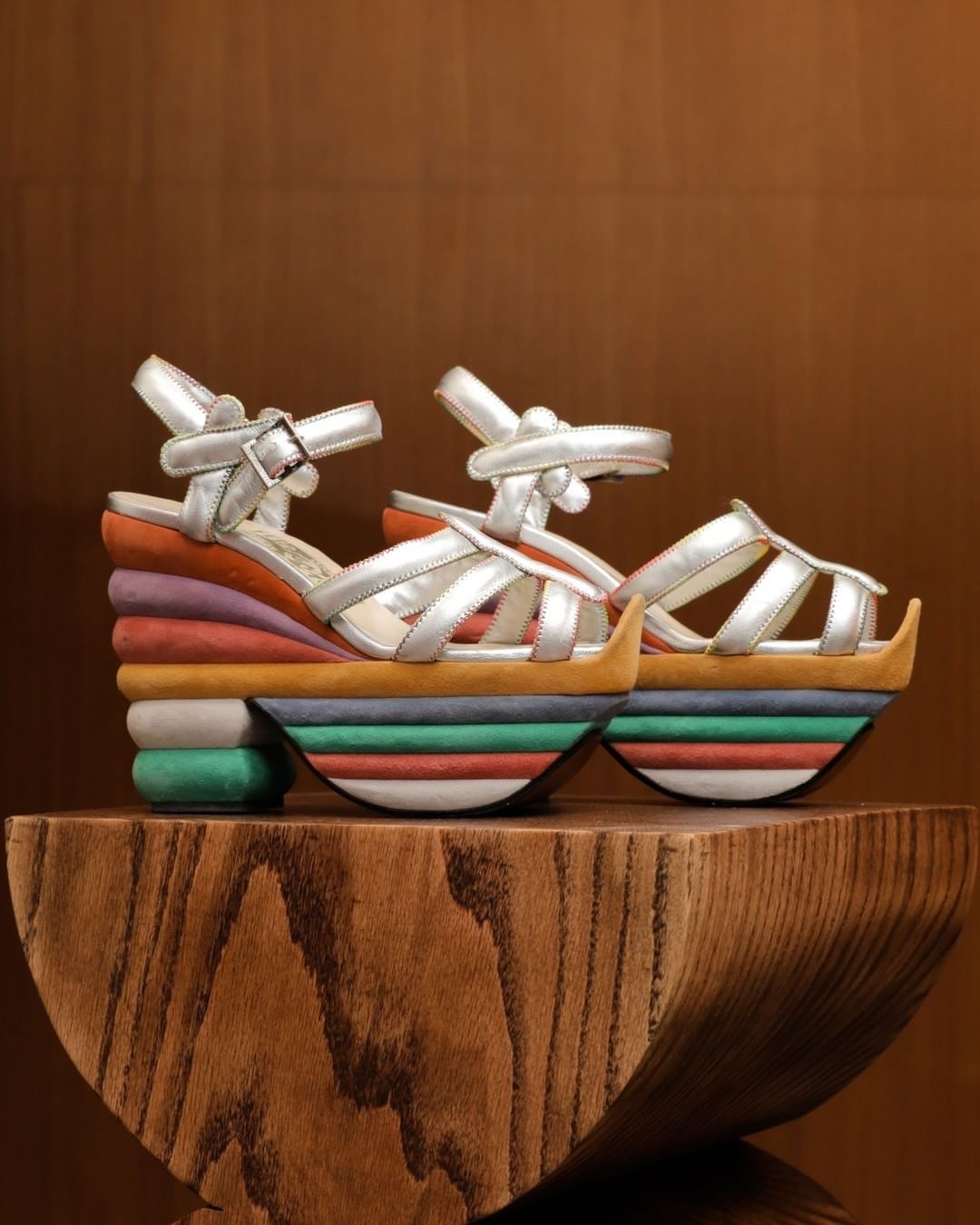
Salvatore Ferragamo’s rainbow wedge
The pattern is older than Davis. Salvatore Ferragamo’s rainbow wedge, designed in 1938 under wartime leather rationing, became the silhouette of the Depression decade. The 1973 oil crisis produced cork platforms five inches high at Yves Saint Laurent and Christian Dior in lockstep. The Asian financial crisis and the dot-com tremors at the end of the nineties produced Spice Girl Buffalo platforms, Alexander McQueen at the British Fashion Awards, the night Naomi went down at Westwood. The 2008 crash gave Davis his data.
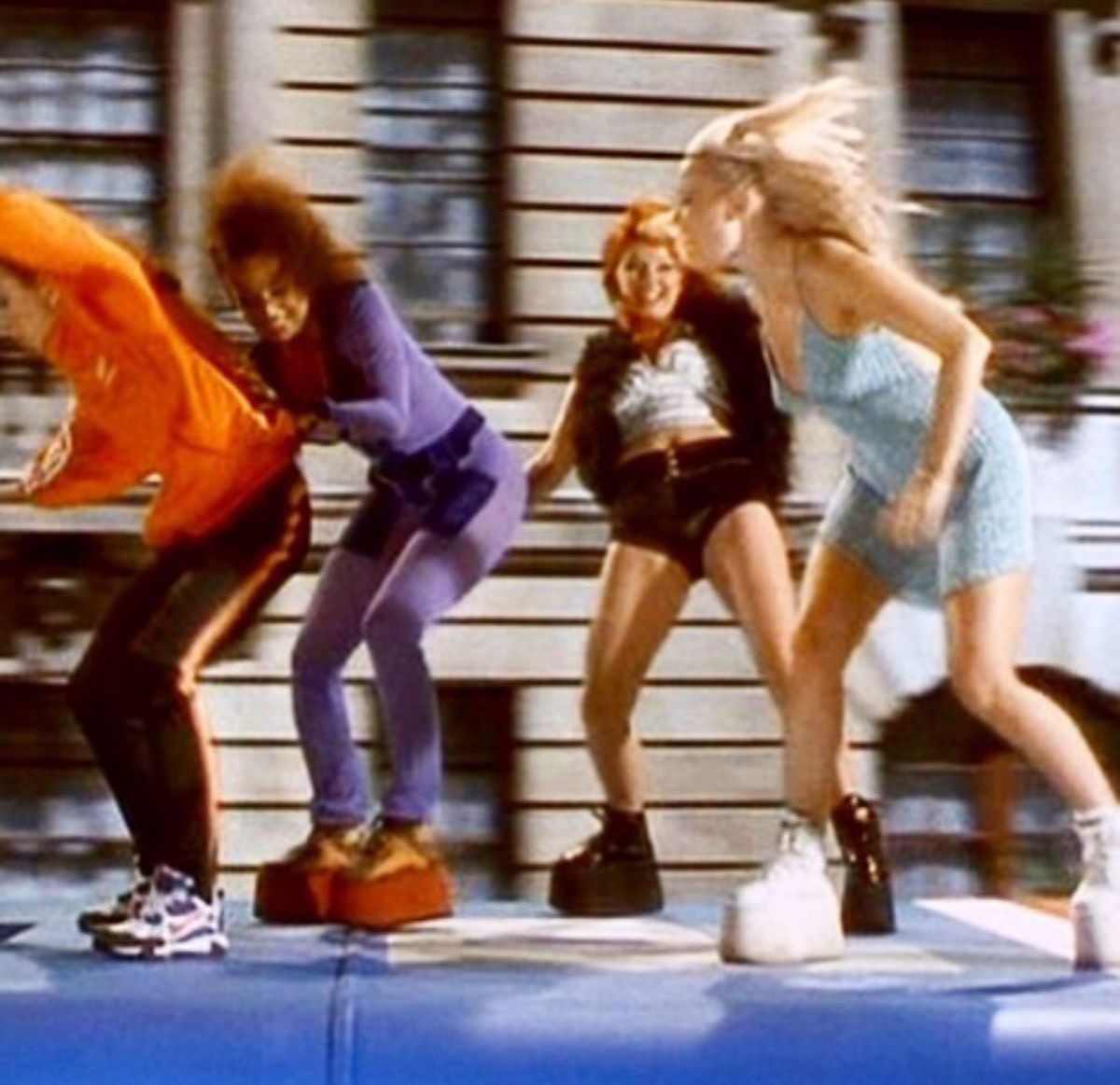
Spice girls
Then 2020 broke the pattern. The pandemic recession should have produced platforms by the index’s own logic; instead the Western shoe market pivoted hard to comfort. Birkenstock’s IPO arc. The Mary Jane revival. Loro Piana’s Open Walk in suede. Ballet flats at every price tier. By 2024 the prediction had functionally inverted: economic anxiety, low heels.
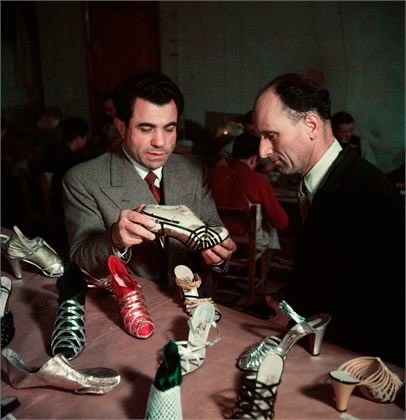
Salvatore Ferragamo
Three readings of the break are reasonable. The pandemic’s housebound retraining of the foot permanently shifted comfort thresholds. TikTok-era trend cycles compressed below twelve weeks, and no economic signal can hold a footwear shape long enough to register. The heel index was always a cute correlation, never a causal model. Probably all three.
And yet, look at what the runways pushed for Spring 2026. Chanel, Alaïa, Toteme, and Khaite went back into high-vamp pumps with eighties power-dressing structure. Tory Burch in chartreuse satin sculptural wedges. Balmain in butter-yellow patent and see-through PVC. Christian Dior and Givenchy revived the T-strap heel. Versace and Loewe brought the platform itself back, chunky and theatrical and slightly absurd. The cultural shoe is moving. Whether it is calling a downturn or merely the end of a flat era, the index is twitching.
In a corner of the Tory Burch showroom in February, on a glass plinth beside a single fold of chartreuse silk, a satin-and-sculpture wedge five inches tall sat in a square of light. The price tag was discreet. The shoe was not. Whatever 2026 turns into, this is what we will be wearing at the moment the chart turns.