business
Why Luxury Brands Are Creating More Experiential Retail Concepts
written by laiba sheraz

Louis Vuitton built an ocean liner in Shanghai. Dior rewrote the rules at Le Bon Marché. Welcome to the era when luxury shopping became a destination you need a diary entry for.
Somewhere between Louis Vuitton constructing a temporary ocean liner in Shanghai and Christian Dior transforming Le Bon Marché into an interactive theatrical installation, the luxury retail industry made a decision. It was decided that selling things was no longer enough. It decided to become a destination.
The experiential retail concept, the idea that a brand's physical space should offer something beyond the transaction, has been circling luxury fashion for years. But in 2025 and into 2026, it moved from concept to operating standard. The café is the new flagship. The pop-up is the new press release. The immersive installation is the new seasonal lookbook.
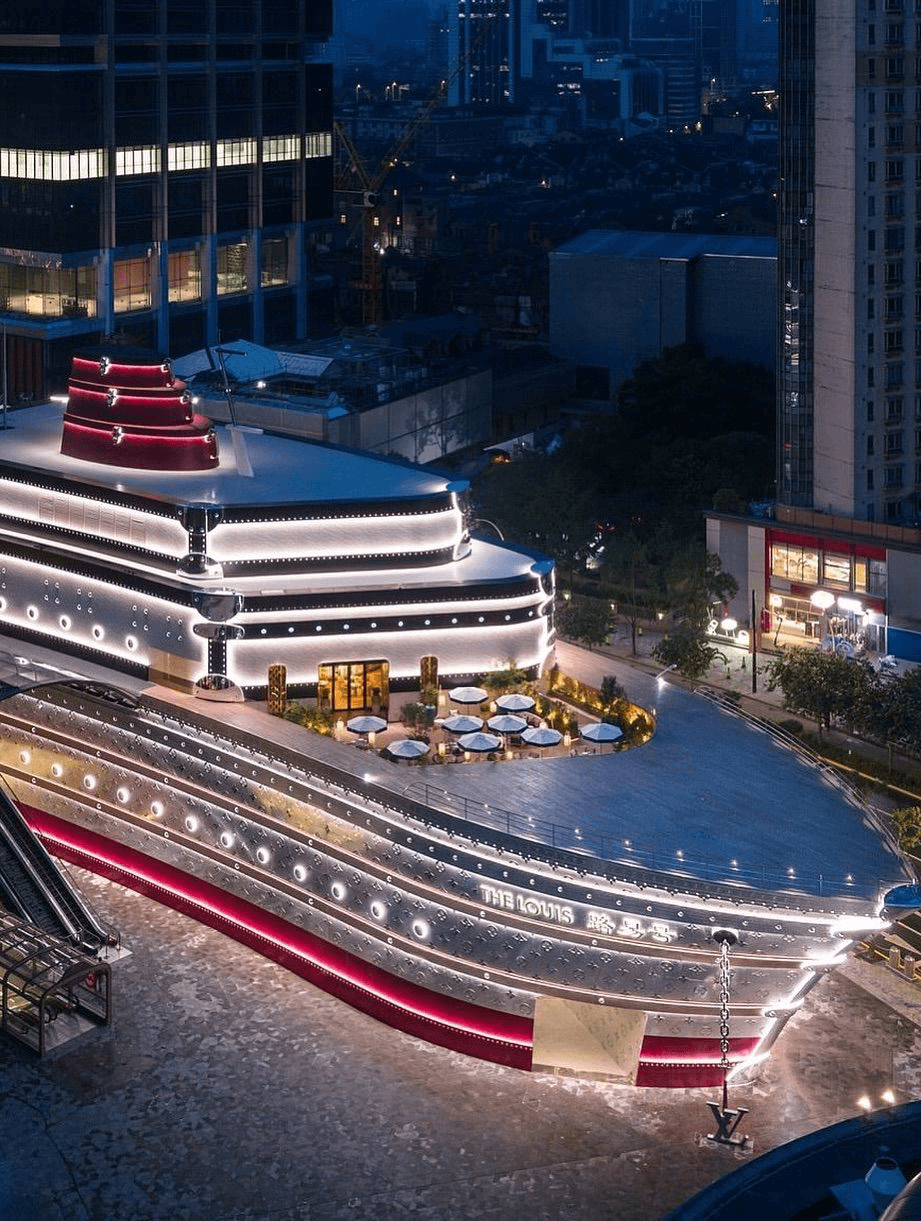
Photo: Louis Vuitton Shanghai pop-up ocean liner 2025
Louis Vuitton's Shanghai activation was, by any architectural metric, extraordinary. A temporary structure designed to resemble an ocean liner, wrapped in metallic LV monogram panels, housed immersive exhibition spaces, workshops, cafés, and exclusive retail areas. It was not a store that felt like an experience. It was an experience that happened to sell things, a crucial distinction, and one that luxury brands are becoming increasingly careful to make correctly.
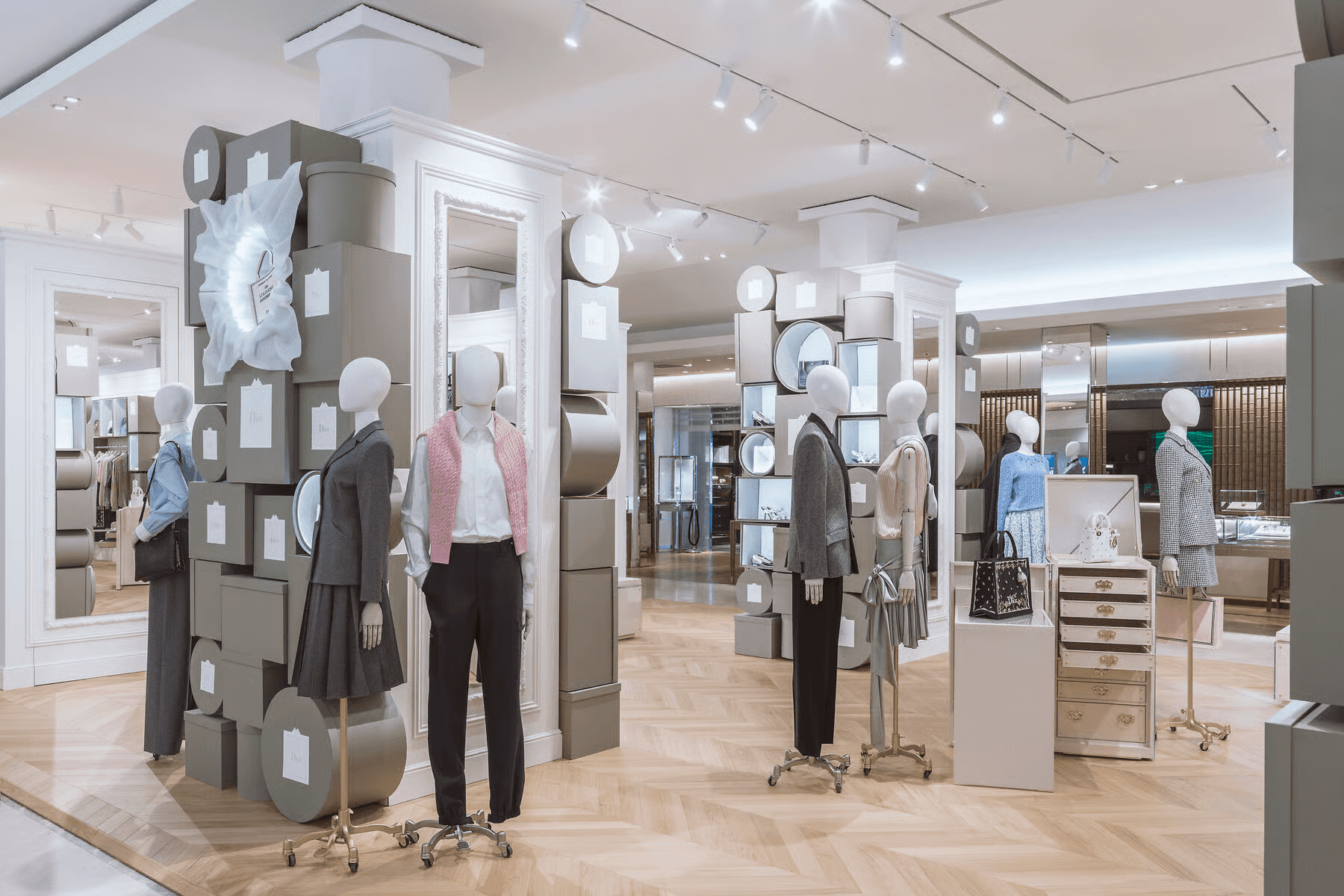
Photo: Dior Le Bon Marché Paris Johnathon Anderson installation
Christian Dior brought the same logic to Paris, transforming the iconic grey lacquered boxes of its archival aesthetic into theatrical towers at Le Bon Marché. Jonathan Anderson's debut Dior collections anchored the narrative; the architecture amplified it. The result was a space where shopping became secondary to encountering the world the clothes came from, which, paradoxically, made people want the clothes more.
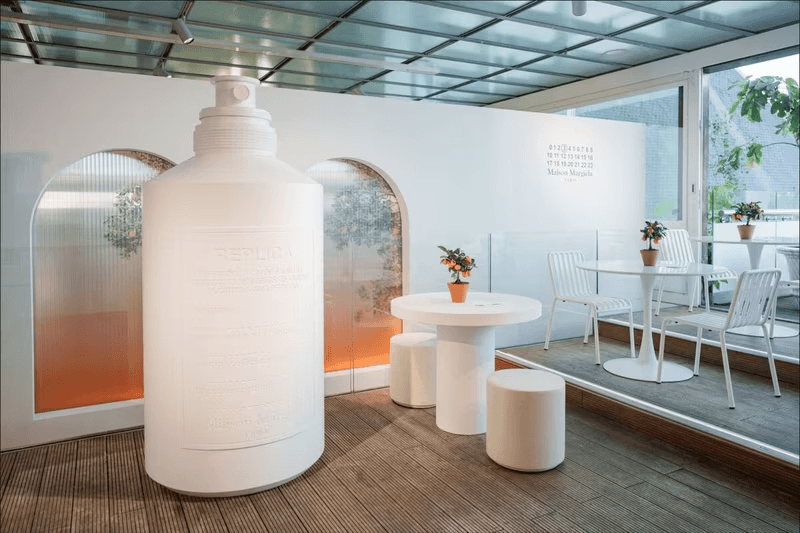
Photo: Maison Margiela Amsterdam pop-up café fragrance
Maison Margiela opened a pop-up café in Amsterdam, synchronizing décor, menu, and scent to translate the brand's fragrance universe into a physical, consumable space. Customers did not browse. They inhabited. The menu, the lighting, the ambient smell, each was calibrated to the fragrance identity of the house. It is the kind of retail that does not announce itself as marketing because it is too busy being an experience.
The pop-up café as a luxury format deserves particular attention because it solves a problem that flagship stores never quite cracked: dwell time. A customer in a traditional boutique will spend an average of eight minutes on the floor. A customer in a branded café environment will spend forty minutes to an hour ordering, photographing, and lingering inside a curated version of the brand's world. The math is not subtle.
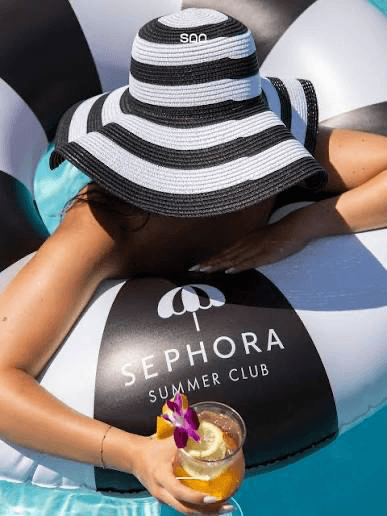
Photo: Sephora Summer Club 2025 Experimental retail
Sephora, operating at the intersection of luxury beauty and aspirational lifestyle, embedded its "Sephora Summer Club" inside luxury resort environments in Brooklyn and Florida. It functioned less as a retail space and more as a branded members' club, with the aesthetic of a boutique hotel and the access of a department store beauty counter. The result attracted a customer who did not come to buy a serum and left with a serum, a lip stain, and an attachment to the brand that no paid advertisement could manufacture.
This shift is a direct response to a consumer who shops online with extraordinary efficiency and enters a physical store for reasons that have nothing to do with inventory. She comes for what cannot be replicated on a screen: the scent, the weight of a marble counter, the particular quality of light in a well-designed room, the feeling of being inside something built specifically for her.
Luxury brands have understood something that high street retail is still learning: the product is no longer the product. The experience is the product. The espresso is the product. The warm weight of a velvet chair in a Dior installation in the sixth arrondissement, that is the product. The handbag is just the thing you buy on your way out.