travel
Luxury Fashion Week Hotels: Where the Industry Stays During Couture
written by laiba sheraz

Five Parisian palace hotels, Plaza Athénée, the Ritz, Le Meurice, Cheval Blanc, and the Crillon, quietly run Couture Week from their lobbies, their bars, and, in Chanel's case, one very famous former residence.
Paris Couture Week has an official calendar, published months in advance by the Fédération de la Haute Couture et de la Mode. It also has an unofficial one, written in room service orders and lobby sightings, and it is arguably more accurate about who actually holds power in fashion that week.
Hôtel Plaza Athénée has long claimed the top of that second calendar. Its red-and-white striped awnings sit on Avenue Montaigne, a five-minute walk from the flagship boutiques of Dior, Chanel, Louis Vuitton, and Saint Laurent, and the hotel is fully booked for Couture Week essentially every year without exception. The connection runs deeper than geography: Christian Dior unveiled his very first collection here in 1947, and named looks "Plaza" and "Athénée" in direct tribute. During the week itself, the hotel functions less like lodging and more like mission control, moving press, stylists, and models between fittings and shows without missing a beat.
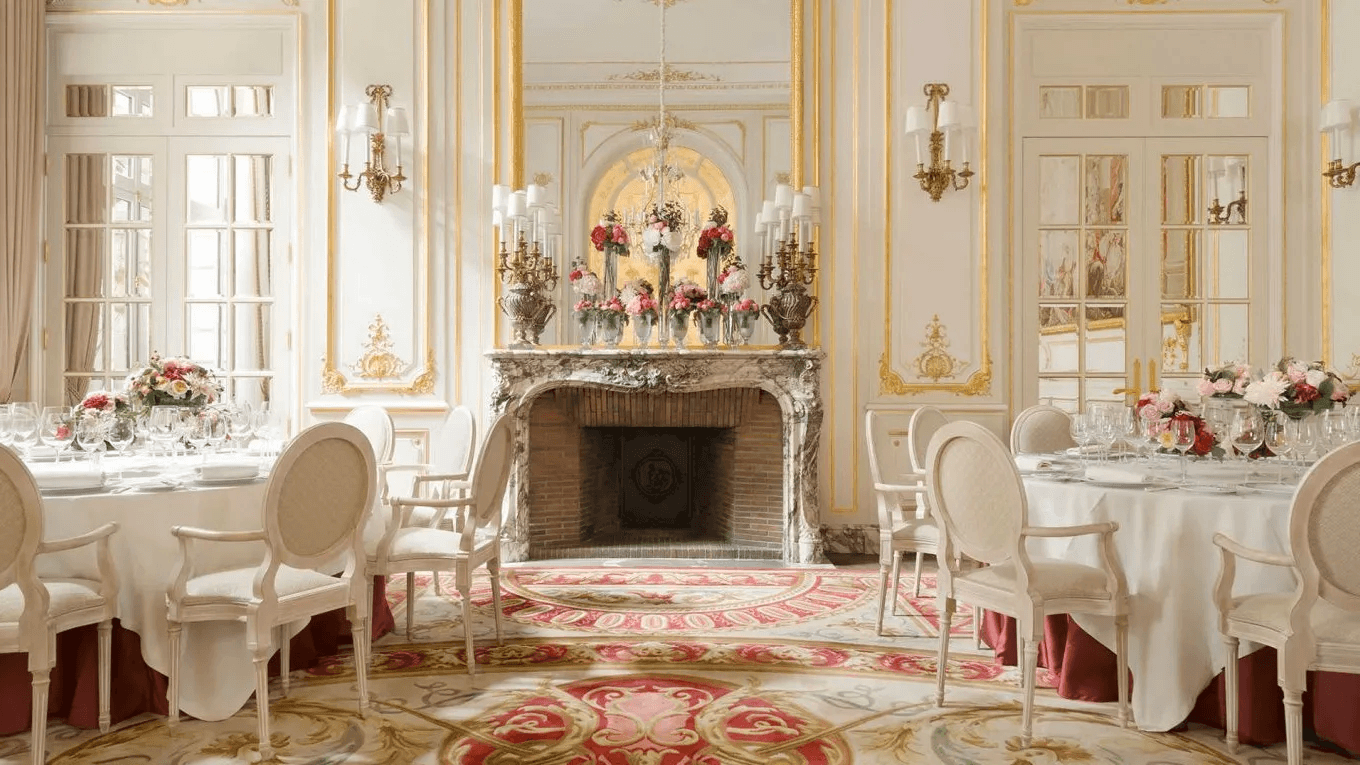
Photo: Ritz Paris
A ten-minute drive away sits the Ritz Paris, whose fashion credentials are, if anything, even more storied. Coco Chanel moved into the hotel in 1934 and stayed, on and off, until her death in 1971, an arrangement that turned the Ritz into something closer to a second atelier than a hotel suite. During Couture Week, editors still gather beneath its chandeliers before heading out to shows, and jewelry houses hosting private appointments nearby frequently use the hotel as their base, presumably because nothing says "trust me with your diamonds" quite like Ritz-level security.
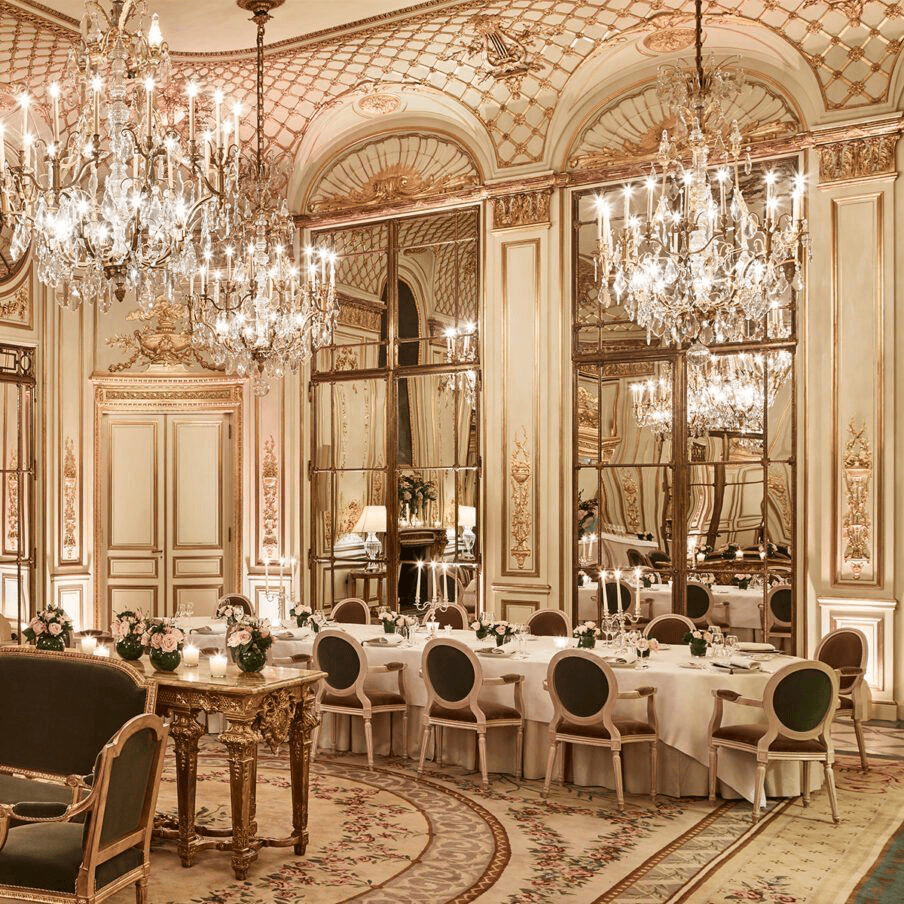
Photo: Le Meurice grand salon
Le Meurice occupies the middle ground, geographically and temperamentally: positioned between the Louvre and the Place de la Concorde, it puts editors, photographers, and creatives within easy striking distance of most couture houses. Its light-filled salons double as informal shoot locations and quiet retreats between shows, and its Michelin-starred restaurant has become its own kind of industry meeting point, less see-and-be-seen than eat-and-be-fed, which by day three of Couture Week is arguably the more valuable commodity.
Cheval Blanc Paris takes the opposite approach entirely. Tucked into the restored 19th-century La Samaritaine building on the Seine, it holds just 72 rooms and suites, making it the smallest and most discreet of the group, a genuine retreat for those who have had quite enough of being photographed for one day. It functions less as a hotel than as a curated private world, which is precisely the appeal for guests trying to disappear between engagements rather than be seen at them.
Then there is the Hôtel de Crillon, built in 1758 and arguably the most historically significant address of the five, having hosted kings, queens, and, in one especially fashion-coded chapter, Valentino's Fall/Winter 1994-95 haute couture campaign, shot by Arthur Elgort with Nadja Auermann on the premises. Two of its suites were designed by Karl Lagerfeld himself, meaning guests can, quite literally, sleep inside a piece of fashion history rather than simply admire one.
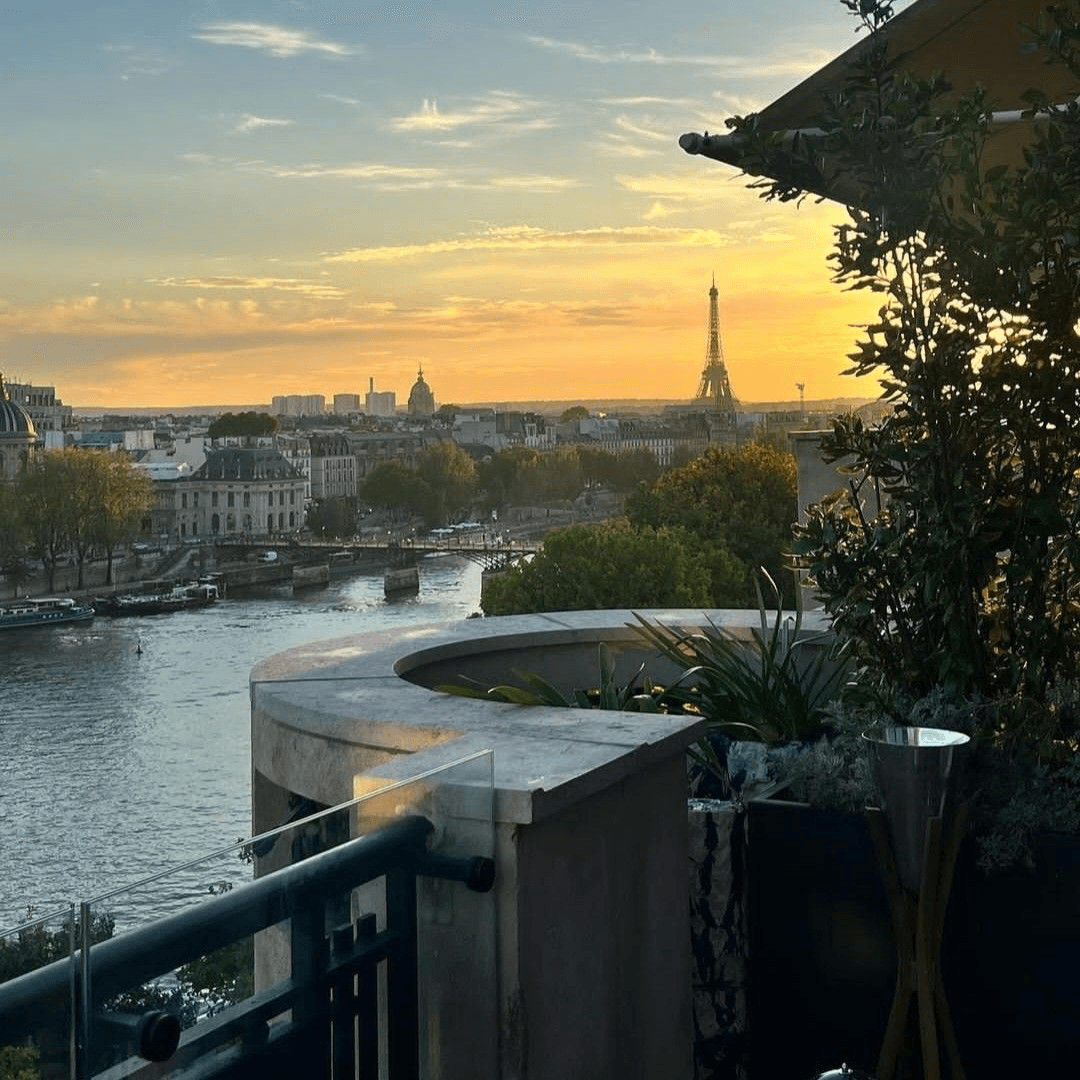
Photo: Cheval Blanc Paris exterior or rooftop view overlooking the Seine
Taken together, these five addresses form something like Couture Week's actual infrastructure, the rooms where deals get made, looks get finalized, and exhausted editors briefly stop performing enthusiasm. The shows may last an hour. The hotels run the whole week.
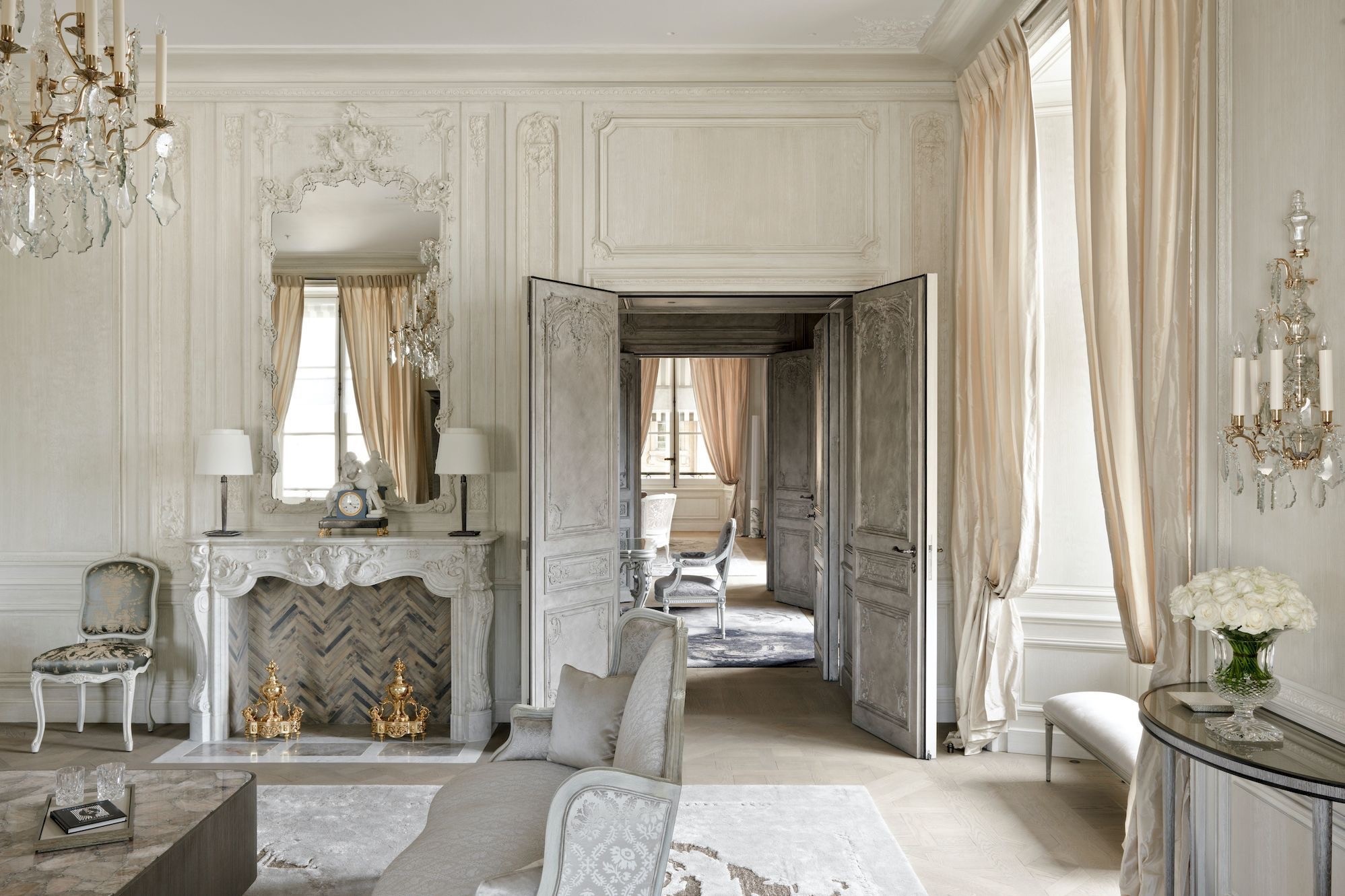
Photo: Hôtel de Crillon facade or a Karl Lagerfeld-designed suite interior
They also share a set of quieter, practical advantages that rarely make the photo captions: discreet side entrances, in-house security teams built to handle motorcades without disrupting a hotel's other guests, and kitchens that can turn around a delayed dinner reservation at midnight without blinking. Restaurant tables get rearranged, elevators get held, and room service adjusts to a schedule that runs on fitting times rather than sunrise. It is hospitality reverse-engineered for an industry that never quite stops working, even when it is, technically, asleep.