Business
Are Fashion Brands Becoming Media Companies?
Written By Laiba Sheraz

How my favorite brands quietly became my favorite channel. Brands now have magazines and content studios with actual headcounts. A look at the houses quietly rebuilding themselves as entertainment empires that happen to sell coats.
There is a question making the rounds in boardrooms with very good art on the walls: is a fashion brand still a fashion brand if most of what it produces is content? In 2026, the honest answer is that the houses stopped waiting for permission to find out.

The evidence is everywhere once you look. Maisons are releasing documentaries with the production polish of a streaming original, archival deep-dives, founder hagiographies, behind-the-atelier access that doubles as a feature-length advertisement nobody resents watching. Chanel has spent years refining this form, turning the mythology of Gabrielle Chanel into an ongoing cinematic universe of heritage films, podcasts, and exhibitions that function less like marketing and more like cultural preservation with a luxury budget attached. Louis Vuitton, meanwhile, now operates editorial platforms sophisticated enough to resemble actual publishing houses, producing travel journalism, artist profiles, and documentaries that happen to orbit a monogram.
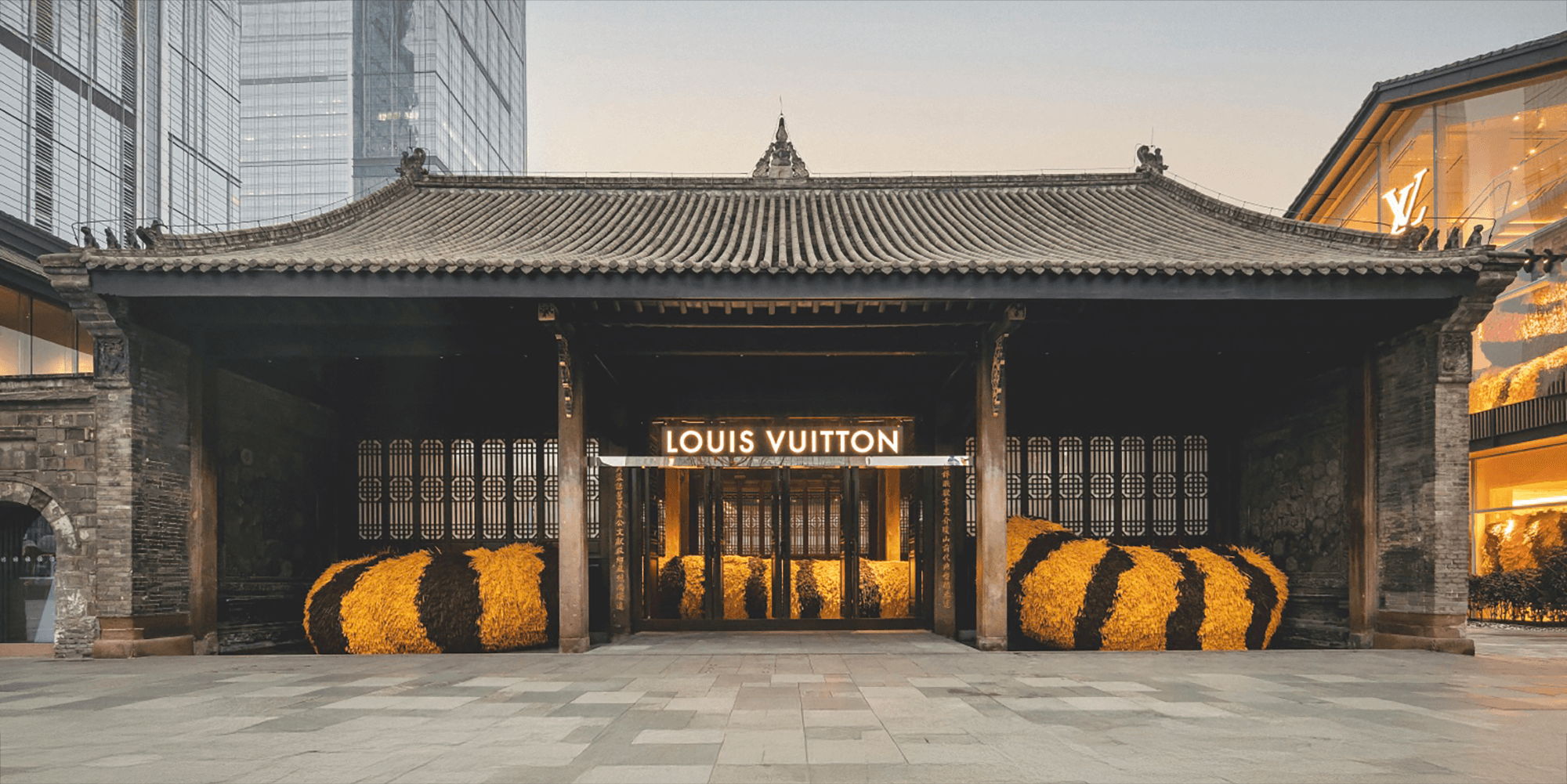
Photo: From Louis to Vuitton Documents the making of a legend
They are launching podcasts, plural, hosting conversations between creative directors and cultural figures that would not be out of place on a serious network. Prada has leaned especially hard into this intellectual posture, building a content ecosystem of podcasts, art collaborations, and architectural discourse that often feels closer to a museum program than a retail strategy. The point is no longer simply to sell a coat. The point is to convince the audience the brand occupies a meaningful place in culture before the coat ever enters the frame.
They are publishing magazines that are actually good, with mastheads and editors and the occasional piece that has nothing to sell. The smartest houses understand that credibility cannot look too optimized. The article about cinema or contemporary art must occasionally be just that an article about cinema or contemporary art, otherwise the illusion collapses under the weight of its own conversion strategy.
This is not strictly new, fashion has always traded in image, and the campaign was the original content. What has changed is the scale and the seriousness. Houses now run content studios with real headcount, real budgets, and real editorial calendars. They are not buying ad space anymore; they are building the channel, programming it, and inviting the audience to subscribe to the brand the way one subscribes to a network.
The logic is sound, even elegant. A traditional advertisement interrupts something the viewer actually wanted. Branded entertainment is the thing the viewer wanted. If a house can make a documentary people choose to watch, a podcast people choose to hear, a magazine people choose to read, it has solved the central problem of modern marketing; being skippable by simply being worth not skipping. Attention stops being something you rent and becomes something you own.
There is also a deeper play around control. For a century, fashion’s narrative was mediated by the press, magazines decided what mattered, critics decided what was good, and the house could only lobby. Owning the media stack means owning the story. The maison becomes its own publisher, its own broadcaster, its own archive. That is enormous power, and the houses are not being shy about taking it.
Even the younger brands understand this instinctively. Jacquemus behaves less like a conventional label and more like a social-native entertainment studio, engineering campaigns for virality before the products even arrive in stores. The images circulate first. The clothing follows later, almost as supporting merchandise for the internet moment itself. Miu Miu approached the same idea from the opposite direction with Women’s Tales, commissioning acclaimed female directors to create short films that frequently have only the faintest visible connection to fashion. The films are the cultural product. The clothes simply inherit the atmosphere afterward.

Photo: Miu Miu Women’s Tales
The risk, of course, is the one every vertically integrated empire faces: who tells you the truth when you own all the microphones? Brand-funded media is, by definition, never going to run the unflattering review. The danger is not that the content is bad, much of it is genuinely accomplished, but that it is uniformly, beautifully on-message, and audiences are not stupid. The moment the documentary feels like a deposition, the spell breaks.
The smart houses know this, which is why the best of this new output has a slightly loose collar, real access, real personalities, the occasional admission of a flaw. They have learned the lesson every media company eventually learns: credibility is the inventory, and you spend it carefully or you spend it all at once.
So are fashion brands becoming media companies? They are becoming something stranger and more interesting than that, entertainment entities with a couture department, cultural publishers with a retail arm, networks whose merchandise happens to cost as much as a car. The clothes still matter; they are the reason the empire exists. But increasingly the clothes are the souvenir, and the story is the product.
The houses that thrive in the next decade will be the ones that understand they are now in two businesses at once and refuse to let either one embarrass the other. Make the coat beautifully. Make the content honestly. And never, ever confuse the audience for an audience that cannot tell the difference. They always can.